It's Friday, 5:05 PM. You just hit "send" on a $12,000 wire to a contractor in Vietnam who's supposed to start your project Monday morning. You get the confirmation email. The money has left your account. Great.
Except it hasn't actually gone anywhere.
It'll sit in limbo over the weekend. Monday it enters some processing queue. Tuesday it bounces through two correspondent banks. Wednesday your contractor might see it. Meanwhile, they can't start work without confirmation of payment, and you can't exactly call them and say "trust me, it's coming."
Or maybe you're not a business owner. Maybe you're the daughter of a woman in Manila who just called to say she needs $500 for a prescription, and the local pharmacy closes in an hour. You log into your banking app, initiate the transfer, and watch the app cheerfully inform you that funds will arrive in 3-5 business days.
Your mother needs the money today. The bank doesn't care.
We've all been here. We've all accepted this as normal. We plan around it. We warn suppliers the wire is "on the way." We tell family members to hang tight until Tuesday. And the entire time, we never question why moving our own money across borders takes longer than shipping a package.
Here's the uncomfortable truth: the reason money moves this slowly has absolutely nothing to do with the laws of physics, distance, or technology. It's a side effect of infrastructure that was built when faxes were cutting-edge and banking hours were the only hours that mattered.
That infrastructure is finally getting replaced. And the gap between how fast money could move and how fast it does move — a gap we've been paying for in time, money, and missed opportunities for decades — is closing.
Why Is This So Slow, Actually?
Most people assume wire transfers are slow because international banking is "complicated." That's only half true. The real reason is simpler and dumber.
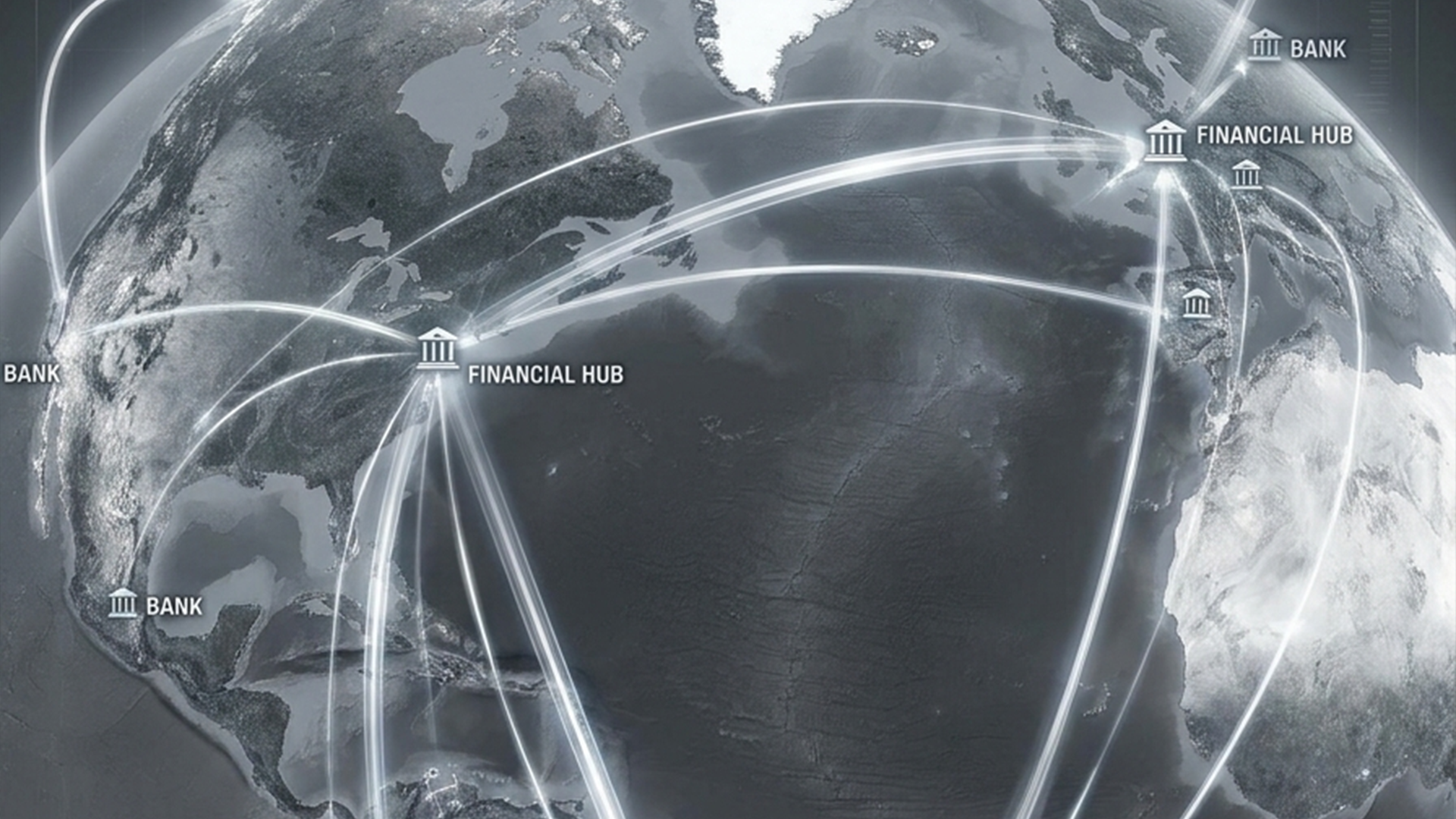
Banks don't actually move money between each other in real time. When you send a wire, your bank doesn't teleport dollars into the recipient's bank. Instead, banks settle up with each other in batches, usually once or twice a day, through a web of intermediary correspondent banks. Your wire gets queued, processed when the batch runs, passed to a correspondent bank, queued again, processed again, and so on.
Every hop takes time. Every cutoff adds delay. Miss the 3 PM batch at your bank? See you tomorrow. Wire going through London during their holiday? See you next week. Weekend in between? See you Tuesday at the earliest.
The money isn't moving fast and getting stuck somewhere. It's crawling the whole way, and most of the time it's not moving at all — it's just waiting for the next batch to run.
And here's the thing: this isn't a bug in the system. This is the system working exactly as designed. A design from a different century, when daily batch processing was genuinely impressive, and when the idea that a transaction might need to finalize outside of business hours was laughable.
The infrastructure hasn't caught up to how the world works now. It's not trying to.
What Three Days Actually Costs
It's easy to shrug off "3-5 business days" as an inconvenience. But let's actually think about what those days cost.
For a business: a $50,000 supplier payment sitting in transit for three days is $50,000 you can't use. Can't pay another invoice. Can't invest in inventory. Can't cover payroll. For a business running with tight working capital — which is basically every small and mid-sized business — that's not a rounding error. It's real money stuck in pipes, doing nothing. Multiply by dozens of transactions a month, and you've got six figures of capital permanently in limbo, not because you spent it, but because the rails haven't delivered it yet.
For someone sending a remittance: Mom needs $300 for medication today. Your wire lands Thursday. So what do you do? You pay a 7% fee at Western Union. Or you use a cash-advance service. Or you pay a "rush processing" fee at your bank that sometimes barely speeds things up. The slow rail didn't just cost you time — it cost you money you had to pay to avoid the time. That's a double-dip that nobody talks about.
For anyone in an emergency: Medical bills. A family member stranded in another country. A deal that needs to close by end of day. A startup wiring a payroll to save a contractor from eviction. In these moments, three days isn't slow — it's useless. Speed isn't a luxury here. It's the entire point of the transaction.
Here's a way to reframe it: three days is the gap between having money and being able to use it. For most of human history, we just lived with that gap because there was no alternative. You accepted that sending money somewhere meant a wait, because the only way to move it faster was to physically carry it yourself.
That's not true anymore. The alternative exists. And once you see it, the three-day wait starts looking less like "how international payments work" and more like something we've all just been putting up with.
The 3-Second World
Let me describe what stablecoin settlement actually feels like, because words like "instant" get thrown around so much they've lost meaning.
You open the app. You enter the amount. You enter the recipient. You hit send.
Before you've put your phone back in your pocket, it's done. Not "initiated." Not "pending." Not "processing." Done. The recipient can see it in their wallet. They can spend it. They can convert it to their local currency. They can forward it to someone else. All of that, within the same 30 seconds that it took you to start the transaction.
This isn't a faster version of the old system. It's not a wire transfer with better software. It's a different system entirely — one where the blockchain itself acts as the settlement layer. There are no correspondent banks, because there's nobody to correspond through. There are no batches, because every transaction is its own settlement. There are no cutoffs, because the network runs 24/7/365 without exception.
2 AM on Christmas Eve? Same speed. New Year's Day from Jakarta to Johannesburg? Same speed. Tuesday afternoon in the middle of normal banking hours? Same speed.
Let's put actual numbers on it. A $500 bank wire from New York to Manila takes 3 business days and costs around $45 in fees. The same $500 sent as USDC on the Solana blockchain takes about 3 seconds and costs under a penny in network fees.
That's not a modest improvement. That's roughly 86,400 times faster. At a fraction of the cost.
This isn't experimental technology that might work in a few years. It's running right now, handling hundreds of billions of dollars in volume every month, and millions of people use it every day — mostly without realizing that what they're using is stablecoin infrastructure under the hood.
What Changes When Speed Becomes Free
Here's where it gets interesting for anyone reading this. Because instant settlement doesn't just make existing processes faster. It changes what's possible.
Cash flow becomes fluid. Money you couldn't deploy yesterday is deployable right now. Invoices pay instantly, which means you can chain them — get paid at 10 AM, pay a supplier at 10:05 AM, receive inventory by end of day. Payroll runs the moment you approve it. Refunds land while the customer is still on the phone. For a small business, this isn't a minor convenience. It's working capital that used to be stuck in transit, suddenly available for you to actually use.
Time zones stop mattering. The global economy runs 24/7. A freelancer in Manila working for a client in Toronto doesn't operate on Toronto's banking hours. A family scattered across three continents doesn't plan remittances around which branches are open today. A supplier in Shenzhen doesn't need to wait until American business hours to get paid. Money that moves at internet speed stops being constrained by anyone's office schedule, and suddenly the whole concept of "international business hours" starts looking as dated as a fax machine.
Emergencies stop being expensive. The biggest hidden cost of slow settlement is the premium you pay to bypass it. Cash advances, rush wire fees, payday lenders, Western Union kiosks charging 8% because they can deliver cash right now. All of those businesses exist because sometimes people genuinely need money to move immediately, and they'll pay huge fees to make that happen. When instant settlement is the default, that entire premium-for-urgency industry becomes unnecessary. Every transfer is already urgent-speed. Nobody needs to pay extra for "fast."
The Thing Nobody Wants to Say Out Loud
Here's a question worth asking: if instant settlement has been technically possible for years, and the infrastructure exists, and it costs a fraction of what wire transfers cost — why haven't banks just fixed this?
The honest answer is that they have no reason to. The slowness is profitable.
When your $50,000 wire sits in transit for three days, that money isn't just doing nothing. It's earning interest for somebody. This is called float, and it's a multi-billion-dollar revenue stream for traditional banking. Wire fees, FX spreads, correspondent bank lifting fees, rush processing charges — all of these exist because money moves slowly. Speed it up, and a significant chunk of banking revenue disappears.
This isn't a conspiracy. It's just economics. Banks aren't villains for running the system that makes them money. But they're also not going to volunteer to dismantle the infrastructure their business depends on. Expecting the banking industry to solve the speed problem is like expecting the fax machine industry to have invented email.
That's why the solution didn't come from inside the banking system. It came from a completely different set of rails — one that was designed without any incentive to slow things down, because the people building it weren't making money on the delay.
And now, for the first time, you have a real choice. Pay for slowness, or don't.
Where Barter Comes In
Barter was built on stablecoin infrastructure because, early on, we made a simple decision: every second your money spends in transit is a second it's not working for you. We refused to build a product that asks you to wait for something that doesn't actually have to take any time at all.
A transfer from New York to Manila. A supplier payment from Austin to Shenzhen. A freelancer invoice from Berlin to Buenos Aires. On Barter, all of these settle in seconds. Not "same-day if you're lucky." Not "next business day." Seconds.
We didn't build this to be technically impressive, and we don't expect anyone to care about the underlying technology. We built it because this is how money should have worked the whole time. The fact that it hasn't is a historical accident — and one that's finally being corrected.
The Choice
Let's go back to Friday, 5:05 PM. The business owner whose wire is about to sit in limbo for three days. The daughter whose mother needs medication money today.
They're not waiting because money takes three days to move. Money doesn't take three days to move. They're waiting because they're on infrastructure that was designed when three days was the best anyone could do — and that hasn't been updated, because the people who control that infrastructure make more money when it's slow.
That used to be everyone's only option. It isn't anymore.
Speed isn't the future of money. It's been possible for years. The only real question now is how long your business — or your family — keeps paying for the lack of it.
Ready to move money at the speed the internet moves? Join Barter's early access list at barter.sh/waitlist. We're onboarding businesses and individuals who are done waiting.