Not long ago, the most common objection we heard from skeptical business owners was some version of the same question: "This all sounds interesting, but isn't it still just a crypto thing?"
It was a fair question back then. Today, it's a dated one.
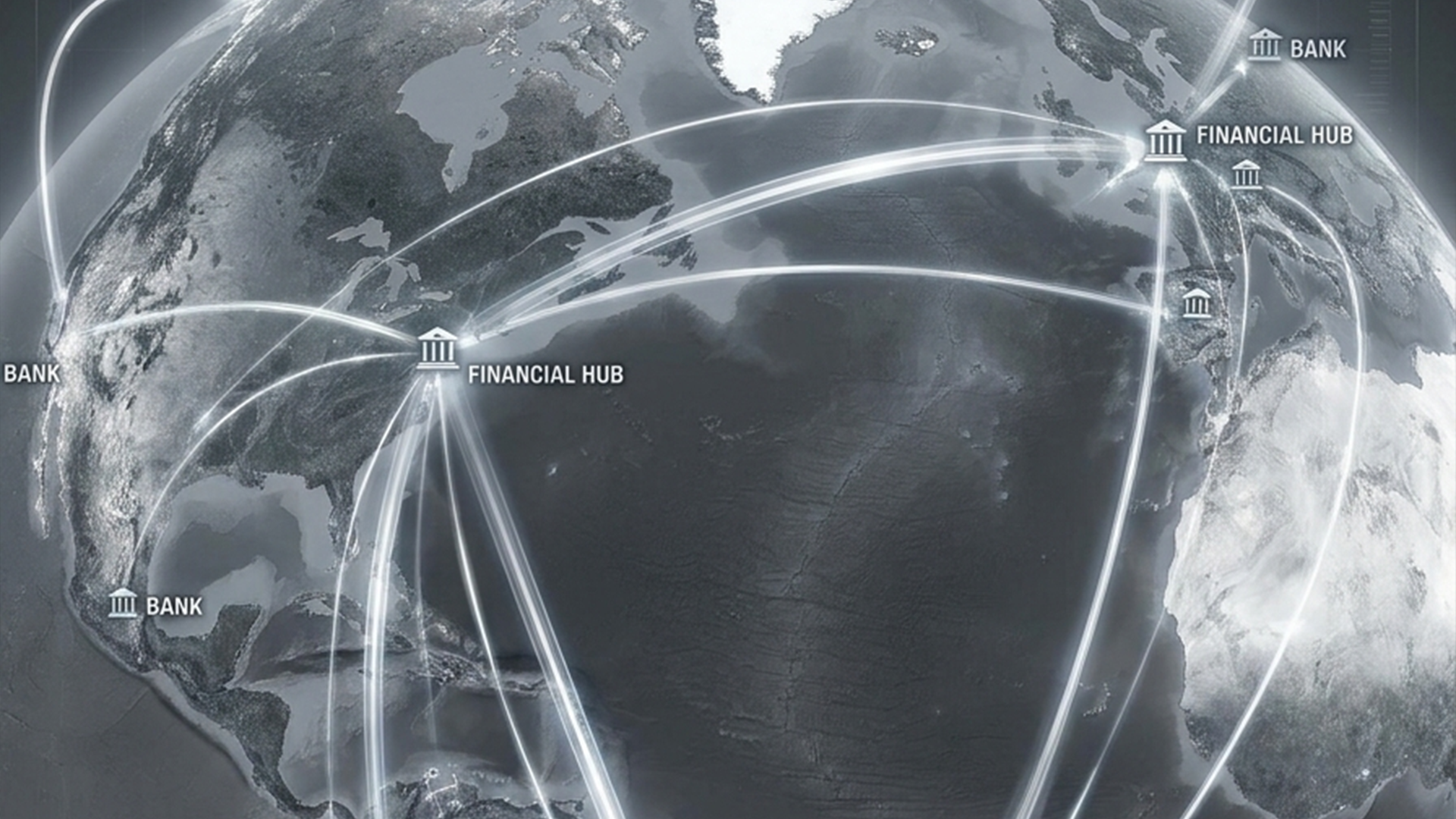
Here are the names of companies and governments that, as of this writing, are actively building on the same blockchain rails that power products like Barter: JPMorgan Chase. BlackRock. Visa. Stripe. The Dubai Land Department. The government of California. Circle. Franklin Templeton. These are not companies that chase hype. They're not betting on fringe technology. These are the institutions that define what "mainstream" means in global finance — the ones that set the standards everyone else eventually adopts.
Every single one of them is moving operations onto blockchain infrastructure. Not as experiments. Not as pilots they'll quietly kill in a year. As core parts of their product and business strategy for the next decade.
If you've been waiting for the "moment" when blockchain-based financial infrastructure becomes legitimate, it already happened. You may have missed it because it didn't arrive with fireworks. It arrived the way most real shifts in finance arrive — quietly, through press releases and SEC filings and partnership announcements that didn't make the front page.
This post is about what's actually happening, who's doing it, and what it means for the businesses trying to decide whether to get ahead of the shift or catch up to it later.
Wall Street Goes On-Chain
The story has to start with BlackRock, because no other move signals "mainstream" quite like BlackRock's.
BlackRock is the largest asset manager in the world, with over $13 trillion under management. Their decisions don't follow trends — they set them. When BlackRock puts a product on blockchain rails, every institutional investor on the planet pays attention, because BlackRock's choices reliably become everyone else's defaults within a few years.
In March 2024, BlackRock launched a tokenized fund called BUIDL — the BlackRock USD Institutional Digital Liquidity Fund. It invests in U.S. Treasury bills and other cash equivalents. The tokens are backed 1:1 by real assets, and they pay dividends directly to investors' wallets every day, seven days a week. As of early 2026, BUIDL holds over $2 billion in assets, making it the largest tokenized real-world asset product on the market. It operates across nine blockchain networks — Arbitrum, Aptos, Avalanche, BNB Chain, Ethereum, Optimism, Polygon, and Solana among them.
In BlackRock CEO Larry Fink's 2026 Chairman's Letter, he wrote that "tokenization today may be roughly where the internet was in 1996." Think about what that comparison is saying. The internet in 1996 had maybe 36 million users globally. It was derided as a niche tool for academics and hobbyists. Within four years, it had 400 million users and was reshaping every industry it touched. Fink is placing tokenization — the process of putting financial assets on blockchain rails — at that same inflection point.
Then there's JPMorgan Chase, which for years was the loudest skeptical voice in banking when it came to crypto. Jamie Dimon famously called Bitcoin a "fraud." Fast forward to today, and JPMorgan has its own dedicated blockchain business unit — Kinexys — which is actively bringing the bank's internal dollar-denominated deposit token, JPM Coin, onto public blockchain networks. In January 2026, Kinexys announced integration with the Canton Network, a privacy-enabled public blockchain for financial markets. The bank is also exploring bringing its Blockchain Deposit Accounts and other digital payment products into the same ecosystem.
The arc here is remarkable. The bank that publicly dismissed crypto as a fad has built a blockchain division that processes billions in transactions and is actively expanding its presence on public networks. When even the skeptics are building on these rails, it stops being a question of whether this is legitimate infrastructure.
The Payments Giants Quietly Rebuilt Their Rails
If BlackRock and JPMorgan are the tokenization story, Visa is the payments story — and it's arguably the most directly relevant one for cross-border commerce.
On December 16, 2025, Visa launched USDC stablecoin settlement in the United States. This is not a consumer feature. It's infrastructure. When a card transaction happens between a merchant and an issuing bank, money has to move between the two. Traditionally, that settlement happens on a 1-5 business day cycle, limited by banking hours. Visa's new system lets banks settle with Visa directly in USDC — Circle's fully-reserved, dollar-denominated stablecoin — which means settlement happens seven days a week, including weekends and holidays, with funds available in minutes instead of days.
As of the launch, Visa's monthly stablecoin settlement volume was running at an annualized rate of over $3.5 billion. That's not a pilot. That's production infrastructure moving real money at serious scale.
Here's the part that's worth reading slowly: the initial banking participants in Visa's U.S. launch — Cross River Bank and Lead Bank — are settling with Visa in USDC over the Solana blockchain.
That's the same blockchain Barter is built on.
When Visa, one of the largest payment networks in the world, picks Solana for a $3.5 billion annualized settlement flow, the question of whether Solana is production-ready is answered. If it works for Visa's treasury, it works for your business.
The broader pattern extends to Stripe. In late 2024, Stripe acquired Bridge — a stablecoin infrastructure company — for over $1 billion. By May 2025, Stripe had launched Stablecoin Financial Accounts to businesses in 101 countries, letting them hold balances in stablecoins and settle on traditional rails like ACH and SEPA. In the first week after launch, Stripe processed stablecoin transactions from customers in more than 70 countries.
The payment companies that collectively process trillions of dollars in global commerce have decided stablecoin rails are the next settlement layer. They didn't make this decision lightly. They made it because the economics stopped making any other choice defensible.
Governments Are Not Watching From the Sidelines
The institutional adoption story gets more compelling when you realize governments are in it too.
Dubai may be the clearest example. In March 2025, Ripple received full approval from the Dubai Financial Services Authority — becoming the first blockchain payment provider licensed in Dubai's DIFC, the regulated financial hub that connects the Middle East, Africa, and South Asia. That license wasn't a partnership announcement or a pilot agreement. It was a formal regulatory approval to operate as a licensed payments provider in one of the world's most important financial corridors.
Two UAE banks — Zand Bank and Mamo — are already using Ripple's infrastructure for payments. Ripple's stablecoin is recognized within the DIFC framework, making it part of the regulated financial ecosystem.
But the Dubai story goes further. In February 2026, the Dubai Land Department — the government agency that runs the country's property registry — unveiled a secondary trading market for real estate tokens issued on the XRP Ledger. This is part of a broader government plan to tokenize 7% of Dubai's real estate market, roughly $16 billion worth of property, by 2033. When property deeds trade hands in Dubai, they increasingly do so on a blockchain.
Let that sink in. This isn't a startup building on blockchain. This is a sovereign government running core public infrastructure — the property registry that backs billions of dollars in real estate transactions — on a public blockchain network.
Now look at California. In 2022, Governor Gavin Newsom signed an executive order establishing California as the first U.S. state to begin creating a comprehensive framework for responsible blockchain technology, including crypto assets. The order explicitly called for creating a transparent business environment for blockchain companies and exploring public-serving use cases for blockchain within state operations.
In 2025, Newsom went further. He launched the California Breakthrough Project — a state task force focused on modernizing government services. The executives he chose to build that task force? Leaders from Ripple, Coinbase, and MoonPay. The first meeting of the task force was held at Ripple's San Francisco headquarters.
If California were a country, it would have the fifth-largest economy in the world. Its governor isn't just passively allowing blockchain companies to exist — he's actively inviting them into the project of modernizing how government works.
When the sovereign governments running regional financial capitals and the largest sub-national economies on the planet are building with these companies, the regulatory legitimacy argument stops being debatable. The infrastructure is legitimate because the institutions that define legitimacy have declared it so.
Why Institutions Are Actually Moving
It's tempting to frame this as a victory lap for crypto. It isn't. The institutions we've been talking about aren't moving because they love crypto. They're moving because the economics have stopped being ignorable.
Three specific reasons show up across almost every institutional adoption story.
Settlement speed. Visa's new USDC settlement system gives banks seven-day settlement windows instead of the traditional five-business-day window. BlackRock's BUIDL pays dividends daily because the underlying infrastructure makes that possible. JPMorgan's Kinexys specifically cites near-instant, 24/7 settlement as a core reason for building on blockchain. For treasury operations at this scale, the difference between three-day settlement and three-second settlement represents hundreds of millions of dollars in working capital no longer trapped in transit.
Operational resilience. Blockchains don't close for weekends. They don't observe bank holidays. They don't have regional cutoffs. For institutions operating globally — which is essentially all of them at this scale — the ability to move money at any hour of any day is not a nice-to-have. It's increasingly a competitive necessity. Visa's press release announcing USDC settlement explicitly called out "enhanced operational resilience across weekends and holidays" as a key benefit.
Cost efficiency. Tokenized asset issuance reportedly costs 1-3% compared to 5-8% for traditional issuance. The same math applies to cross-border payments, where blockchain settlement typically costs a fraction of a percent versus the 3-7% all-in cost of wire transfers. When you're moving trillions of dollars across a global network, even single-percentage-point cost improvements translate into billions in operating savings.
None of these reasons require believing that crypto is going to replace the dollar or that Bitcoin will hit a specific price target. They're just operational efficiency arguments that any serious CFO can understand. The institutions moving early are the ones who did the math first.
What This Means for Your Business
This is where the institutional story becomes your story.
The first implication: if BlackRock, JPMorgan, and Visa are using these rails, the regulatory and counterparty risks of building on them are dramatically lower than they were even two years ago. If you've been holding back on exploring stablecoin settlement because it felt too new or too uncertain, the risk picture has shifted. Your own banking partners are probably using this infrastructure behind the scenes already. You just don't see it because it happens below the product layer.
The second implication: the infrastructure you choose for your business shapes what your business can do. Companies that adopt faster, cheaper, 24/7 settlement will out-operate companies still constrained by banking hours and correspondent-bank fees. This isn't a hypothetical — it's already playing out in any industry where cross-border payments matter, from global freelancing to international e-commerce to manufacturing supply chains. The gap between companies on modern rails and companies on legacy rails is widening.
The third implication is the most important one: you don't have to wait for this infrastructure to trickle down to your business. It's already available. The only real question is whether you use it now or wait until it becomes the only option.
Where Barter Fits In
Barter exists in this landscape as a deliberate choice. We didn't build on obscure technology that might someday go mainstream. We built on the same infrastructure the world's largest institutions are actively migrating to.
We settle transactions on Solana — the blockchain Visa chose for its $3.5 billion annualized USDC settlement flow, and one of the networks BlackRock's BUIDL operates on. We use USDT and USDC — the same stablecoins JPMorgan, Stripe, and Circle are building treasury operations around. Our technology stack isn't novel. It's the institutional stack, wrapped in an interface designed for actual operating businesses.
What's different is access. When JPMorgan or Visa eventually brings this infrastructure to everyday commerce, they'll do it through their own products, at their own pace, and at enterprise prices. Barter lets you use the same rails today, at a price and scale that fits businesses of any size — not just institutions with treasury teams and nine-figure volumes.
We think that's the opportunity. Not to bet on speculative technology. To use the same infrastructure the world's biggest institutions are already using, before your competitors figure out they can too.
The Migration Is the Story
The skeptics asking whether blockchain is "just a crypto thing" aren't wrong to ask. They're just a few years behind. The conversation has moved on. BlackRock has moved on. Visa has moved on. JPMorgan has moved on. Dubai and California have moved on.
The biggest institutions in the world aren't migrating to blockchain rails because it's trendy, or because they want to signal innovation, or because they're hoping crypto takes off. They're migrating because the alternative is losing ground to the institutions that moved first. Speed, cost, and resilience stopped being optional improvements and became competitive requirements.
The same calculation applies to your business. The infrastructure is here. The institutional validation is here. The economics are here. The only question left is whether you choose to use it — or whether you wait until you're forced to.
Ready to put your business on the same rails the world's biggest institutions are moving to? Join Barter's early access list at barter.sh/waitlist. We're onboarding businesses that want to stop paying legacy costs for legacy infrastructure.