Today, Barter is a small team, a working product, and a growing list of people who believe that moving money shouldn't cost what it costs or take as long as it takes. That's our starting point. This post is about where we're going from here, and why we think the journey is worth taking.
We're writing this because we think the companies and individuals who choose to work with us early deserve to know what we believe. Not a marketing pitch. Not a feature roadmap. The actual principles we're building the company around — the things that won't change as the product grows.
One line captures it more clearly than any other: finance should be fair, electronic, and available at the convenience of the user — not the bank.
Everything that follows is an expansion of that idea.
What We See in Today's System
Before we talk about where finance is going, it's worth being clear about where it is.
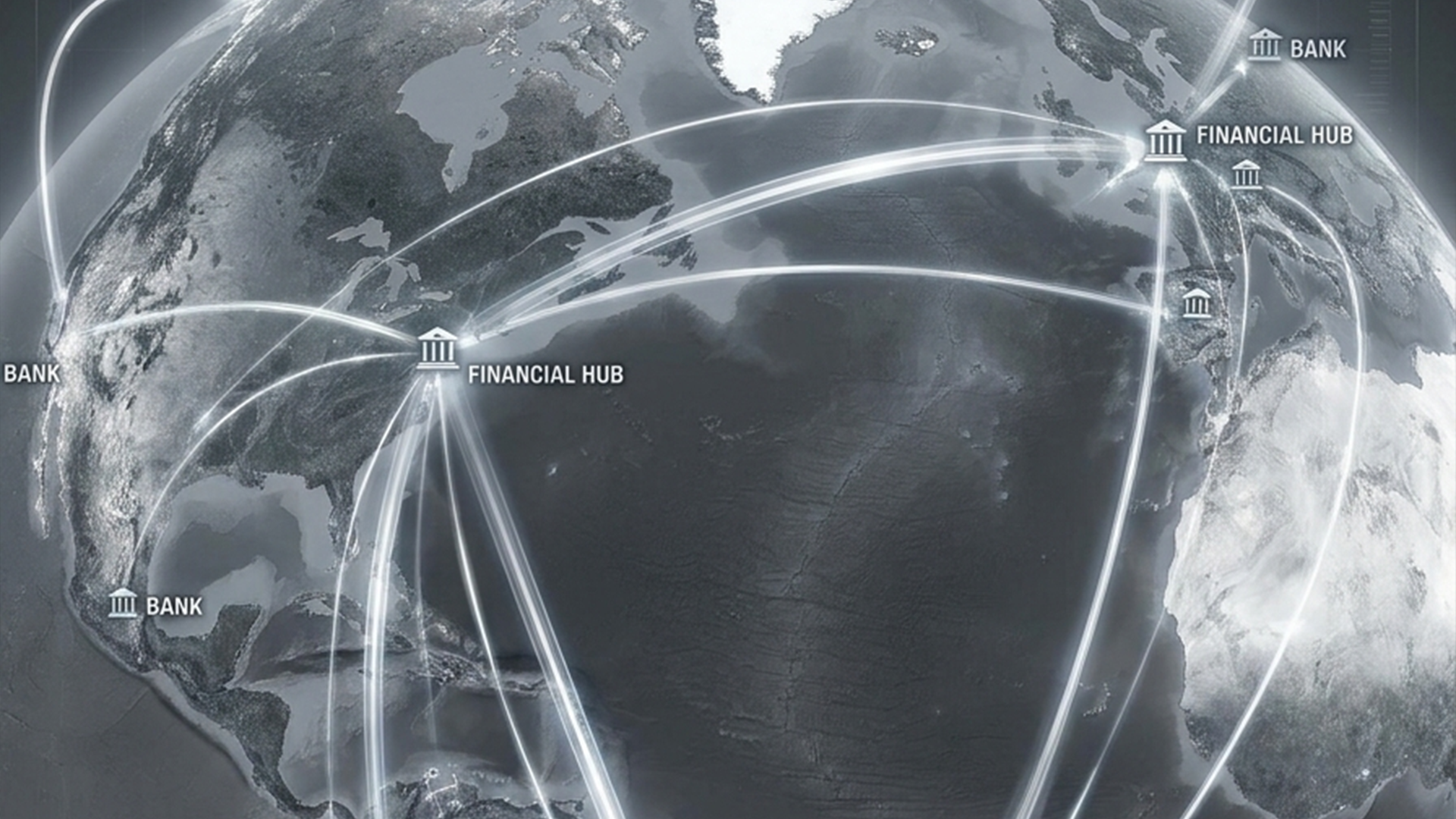
The current system for moving money across borders was built for a different era. SWIFT, the backbone of international transfers, dates to 1973. Correspondent banking — the web of intermediary relationships that actually routes your wire from one country to another — is older still. These systems were remarkable in their time. But they were designed when sending a message overseas meant using a telegraph, when banks operated strictly during business hours, and when the expectation was that money moved slowly and everyone was fine with it.
That world has changed. The infrastructure hasn't.
The consequences show up quietly, but they're real. According to the World Bank, the global average cost of sending a cross-border remittance is around 6% — meaning a family sending $500 home loses about $30 to fees, every single time. Wire transfers take one to five business days in a world where everything else, from email to video calls to package tracking, happens instantly. Weekends and holidays pause the global economy for reasons that no longer make technical sense. And small businesses without in-house treasury teams consistently pay the highest costs, because they have the least leverage to negotiate better rates.
None of this is anyone's fault in particular. The system wasn't designed to be extractive. It just wasn't designed to keep up with a world where a freelancer in Buenos Aires does work for a client in Frankfurt on a Tuesday afternoon and expects to be paid the same day.
We look at this and see an opportunity. Not to tear anything down, but to build something that fits how the world actually works in 2026.
What We Believe Finance Should Look Like
The ideas that guide Barter aren't complicated. They're the same principles a thoughtful person might arrive at if they sat down and asked what a modern financial system should do. We believe in them clearly, and we want the people who work with us to know what they are.
Finance should be fair. The same transaction shouldn't cost a freelancer in Manila ten times what it costs a corporation in Manhattan. Access to efficient financial infrastructure shouldn't depend on how much money you already have, or which country you happen to be operating from. When fees scale unfairly against the people least able to absorb them, something has gone wrong with the design.
Finance should be electronic and immediate. Money is already digital in every meaningful way — it's numbers on a screen, moved between databases, backed by trust and ledgers rather than physical objects. There's no technical reason a transfer should take three business days when a message circles the globe in milliseconds. The gap between how fast money could move and how fast it does move is where value leaks out of the system, and where opportunity gets delayed.
Finance should work on the user's schedule, not the bank's. Businesses don't run on banking hours. Families don't send remittances on banking hours. A contractor who finishes work at 9 PM on a Friday shouldn't have to wait until Monday for confirmation of payment. A system designed today should recognize that weekends, holidays, and time zones are not legitimate reasons to pause commerce.
Finance should be transparent. You should know exactly what you're paying and why. Hidden exchange-rate markups, surprise correspondent fees, lifting charges that appear from nowhere — these are artifacts of a system that assumed customers wouldn't notice or couldn't compare. Today's customers do notice, and they can. Transparency isn't a feature. It's a basic expectation.
Finance should be accessible. A good financial product should work for a multinational paying a thousand contractors and for a first-time user sending $200 to family overseas. Infrastructure built exclusively for one of these groups inevitably excludes the other. We don't think that's necessary, and we don't think it's right.
These are the principles that shape what we build. Every product decision at Barter eventually gets tested against them.
Where We Start
Right now, Barter is early. We want to be honest about that.
We're a payment gateway built on the Solana blockchain, using stablecoin infrastructure — primarily USDT and USDC — to settle cross-border transactions in seconds at a fraction of traditional costs. We partner with trusted infrastructure providers including Turnkey, Coinbase, and MetaMask. We have a working product, a growing list of early users, and a clear view of where we're headed.
But we're not pretending to be bigger than we are. We're a small team at the start of a long build.
We think that's actually important to say. The financial industry has a long tradition of companies projecting size and scale before they've earned either, and it leads to broken promises and disappointed customers. The businesses and individuals who choose Barter today aren't signing up for a polished, mature enterprise platform. They're signing up for a company at its earliest stage — one that's working hard, moving fast, and figuring things out as it goes.
There's a real upside to that. The people who work with us early will shape what Barter becomes. The corridors we prioritize, the features we build, the partners we integrate with — all of it gets informed by what our users actually need. Early customers aren't just users; they're the reason the product becomes the right product.
If you're reading this and wondering whether Barter is ready for your business, the honest answer depends on what you need. For businesses willing to adopt newer infrastructure in exchange for dramatically lower costs and faster settlement, we think the answer is yes, and we'd love to talk. For businesses that need the scale and scope of a mature enterprise platform, we're not there yet — but we're building toward it, and we'd still like to stay in touch.
Where We're Going
Here's where we see Barter growing. We think about it in three stages — not as a strict roadmap, but as a way of describing the arc.
Stage one is the rail. Right now, the core thing Barter does is move money across borders in seconds, using stablecoin settlement as the underlying mechanism. This is our foundation. Everything else is built on top of it. In the near term, our focus is making this rail reliable and cost-effective across a growing number of corridors. The United States, Europe, Latin America, the Middle East, and Southeast Asia are all regions where the need for better cross-border settlement is acute, and where we're actively expanding. The rail has to work flawlessly before anything else matters.
Stage two is the network. As more businesses and individuals use Barter, the value of the platform to each participant grows. A freelancer receiving payment from a client in Europe can use those same funds to pay a supplier in Asia, without leaving the platform or touching the legacy banking system in between. A business collecting international revenue can pay international contractors through the same infrastructure. Each transaction strengthens the network, and each new user makes the network more useful to everyone already on it. This is where Barter stops being a payment tool and starts becoming a connected financial layer.
Stage three is the ecosystem. Looking further out, we see Barter as financial infrastructure for a globally connected economy. That means building the tools businesses actually need to operate across borders — multi-currency balances, treasury controls, reporting, reconciliation, and clean integrations with accounting systems and other software people already use. It also means partnerships across the broader fintech ecosystem, because we don't believe any one company should own how the world moves money. The goal isn't to replace the financial system with a single platform. It's to help build a more open, interoperable one.
Whatever form this takes as we grow, the principles stay the same. Fair, fast, transparent, user-first. The product will change. The principles won't.
What You Can Expect From Us
If you're considering working with Barter, here's what we commit to.
We'll be transparent about pricing. Every fee will be visible before you confirm a transaction. No hidden spreads, no mystery markups, no surprise deductions on the receiving end. If we charge you, you'll see it. If we can't do a transaction at the price we quoted, we'll tell you before we try.
We'll be honest about where we are as a company. Businesses deserve to know whether their infrastructure provider is early-stage, scaling, or mature. We'll tell you the truth about our volume, our reliability, our limitations, and our progress. Partnerships built on honest expectations last longer than ones built on optimistic projections.
We'll prioritize reliability over everything. Being fast and cheap doesn't matter if transactions don't go through. Our team takes operational reliability seriously, and we invest in it accordingly. When things go wrong — and in any young company, occasionally they do — we'll communicate quickly and fix them thoroughly.
We'll listen to the businesses we serve. Our product roadmap is shaped by the people using Barter every day. If there's a corridor you need, a feature that would unlock real value for your business, or a pain point we haven't seen yet, we want to hear about it. The best version of our product is the one our customers help us build.
These aren't marketing promises. They're the operating standards we hold ourselves to.
The Invitation
If any of this resonates — if you've felt the friction of the current system, if you've watched fees eat into transactions that shouldn't cost what they cost, if you see what stablecoins are making possible and want to put your business on better infrastructure — we'd be glad to have you with us.
Join our early access list. Try the product. Tell us what you need. Help us build the financial rail you actually want to use.
We're not asking you to believe in a revolution. We're asking you to consider a company that thinks finance should work better than it currently does, and is building toward that, one corridor and one customer at a time.
Where This Goes
We started this post by saying Barter is a small team with a clear belief about where finance is heading. We'll end it the same way.
The future of cross-border payments isn't going to be loud. It'll be a quiet, steady shift toward infrastructure that's fair, fast, transparent, and available whenever people need it. Some of that shift will come from new companies like ours. Some of it will come from traditional institutions catching up. Most of it will happen without a lot of fanfare — businesses simply moving their operations to better rails because the better rails are there.
We're building a piece of that future. If it sounds like the kind of thing you'd like to work with, or be part of, we'd love to hear from you.
Join Barter's early access list at barter.sh/waitlist. We're onboarding businesses and individuals who are ready for financial infrastructure built for the world as it actually works today.